MicroShiner

where the world goes to discover craft spirits and the small batch lifestyle

Showing posts with label craft. Show all posts
#DrinkBetter cocktail craft recipes

#DrinkBetter: Derby Days in the Alexander Valley

Tuesday, September 20, 2016
The mint julep is the cocktail of choice at the Kentucky Derby, which is where this drink gets its inspiration. Traditionally, it's made with bourbon, but also works well with rye.

Spot:
AVB
3487 Alexander Valley Road
Healdsburg, CA 95448

Cocktail:
DERBY DAYS


Ingredients:
-Sonoma County Distilling Rye
-Sour Cherries
-Garden Grown Mint
-Lemon Juice
-Sugar Cube

Mixologist:
KI KI


Continue reading
Share:
#DrinkBetter cocktail craft recipes

#DrinkBetter: San Francisco's Most Distinguished Cocktail

Tuesday, September 13, 2016
Before the martini (or so the story goes), there was the Martinez, a derivation of the original vermouth cocktail that made use of the Old Tom Gin popular in the 1800s. San Francisco is often credited with its birth, and while this point is certainly up for debate, there can be no doubt that the height of the drink's popularity coincided with the City by the Bay's golden era in the Gilded Age.

When the rails of the Central Pacific and the Union Pacific were joined at Promontory Point, Utah, in the Spring of 1869, the dreams of many men were realized. Four such men were the Central Pacific’s “Big Four,” C. P. Huntington, Charles Crocker, Mark Hopkins and Leland Stanford. All resided in the most elegant, lavish and exquisite mansions, surrounding the present location of the Big 4 Restaurant at The Scarlet Huntington. 
The famous Big Four held center stage in San Francisco for more than a third of a century. The Big 4 Restaurant recaptures the era when these men reigned supreme over all of San Francisco. (history taken from the Big Four website)

Spot:
THE BIG 4 RESTAURANT 
(415) 771-1140
1075 California St., San Francisco

Cocktail: 
THE MARTINEZ

Ingredients:
- Anchor Steam Old Tom Gin
- Sweet Vermouth
- Maraschino Liqueur
- Orange Bitters


Continue reading
Share:
#DrinkBetter cocktail craft recipes

#DrinkBetter: Frond or Foe

Tuesday, August 30, 2016
Attached to the Medlock Ames Winery Tasting Room is a small bar with a garden in the back. It doesn't even have a sign, but it gets a huge local crowd. If you're lucky, you might even find a few cuties making a cocktail stop.


Spot:
AVB
3487 Alexander Valley Road
Healdsburg, CA 95448


Cocktail:
FROND OR FOE

Ingredients:
-Bummer and Lazarus Gin from Raff Distillerie (usually uses vodka)
-Lime Juice
-Fennel Bitters
-St. George Distillery Absinthe
-Soda
-Garden Grown Fennel Fronds


Mixologist:
KI KI


Continue reading
Share:
Colorado craft grain to glass micro-distillery spirits Tim Wenger

@timwenger1: Colorado Craft's Rising Star

Thursday, August 11, 2016
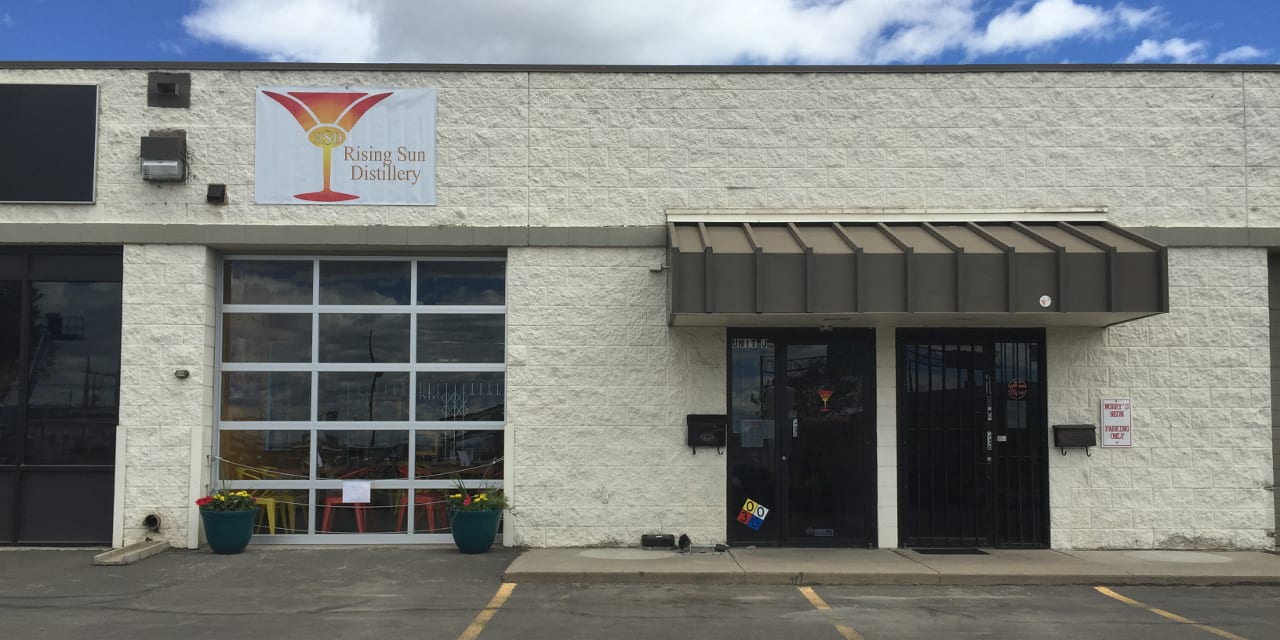
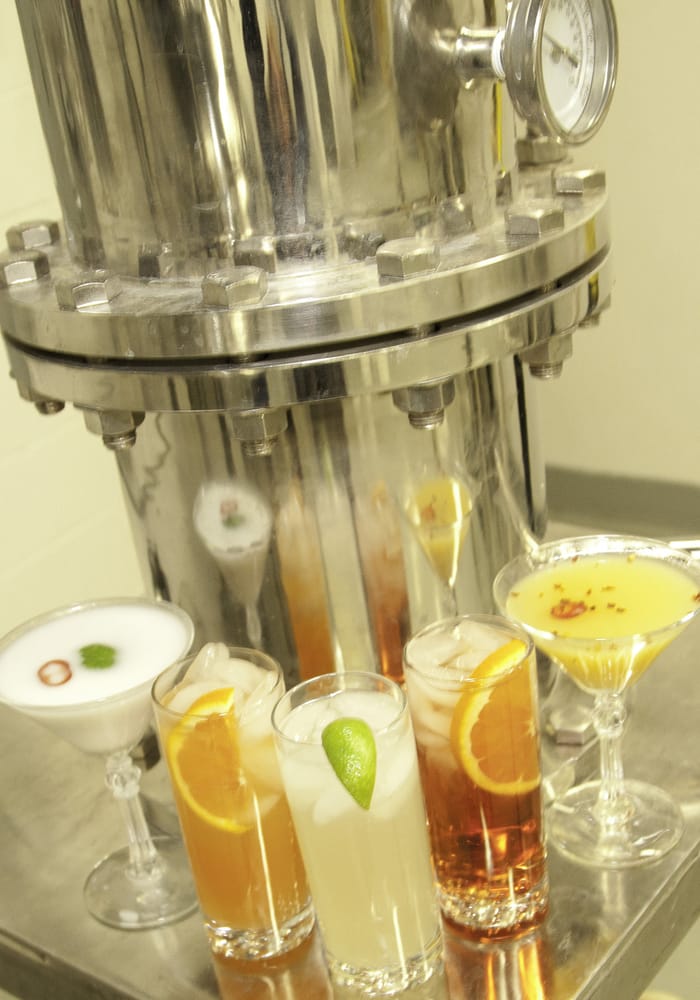
Recently, I spent some time hanging out at Denver’s Rising Sun Distillery. Within the first few minutes of being there, I noticed something missing - the air of testosterone that permeates most distilleries. As head distiller Kim Cavallaro worked a batch of mash set to eventually be enjoyed as Rising Sun’s Organic Vodka, co-founder and owner Dawn Richardson gave me the rundown on her business.


Rising Sun Distillery sits in one of the few areas of Denver not yet completely overrun by gentrification. Their building is just on the other side of Colfax from the soon-to-be-renamed Sports Authority Field at Mile High, on Zuni St. just north of 13th Ave. For those more familiar with Denver’s craft breweries, Rising Sun is two doors down from Strange Brewing Company. Together, the two provide the perfect pre-Broncos game party spot for anyone not lucky enough to get into the lots at the stadium. Co-founders Dawn and Sol Richardson opened their doors in January 2015, after spending nearly a year reworking their space inside an old industrially-zoned building to meet code for making booze.

“Having more women around wasn’t intentional, but it’s been a great asset,” said founder and co-owner Dawn Richardson. “But we did brand our product to be a little more feminine. I didn’t want another cowboy label. I mean we’re in Colorado, everybody’s got a cowboy label, right? Everybody’s doing whiskey, every brewery and every distillery has corrugated tin and barn wood. At this point, it’s almost like it’s a franchise.”

“I hear you,” I said. “A lot of distilleries do look exactly the same.”

“We do end up getting more women in here than men,” Dawn said. “I wanted to do something that felt different.”
photo by www.centennialspecialtytours.com
Kim, who started with Rising Sun shortly after the company’s founding and upon her completion of a culinary degree, doesn’t think of herself as a groundbreaker. For her, this is business as usual. Wine and beverage courses in school kicked off her passion for the liquid side of the art, followed by an internship with Englewood, CO’s Downslope Distilling. “While I was in culinary school I realized that my heart was more in beverage,” she said. “I absolutely loved it. It still had that creative aspect of cooking that I loved and a lifestyle that I felt I was able to sustain a little bit better.”

Luck played in her favor out. “When I graduated, I was looking for a distilling job at the exact same time that these guys were looking for their first distiller. I’m super proud of it because it is a unique position to be in,” Kim said. “I don’t think about it so much as being a woman; I think about how young I am. I’m only 23, and I’m taking things from grain to bottle and sending them out into the world, doing recipe development. It’s really exciting.”


Since forming Rising Sun in late 2014, Sol and Dawn have prioritized local and organic ingredients - often a daunting task. “I talked to the Colorado Department of Agriculture and they don’t know of any certified organic corn growers in Colorado, other than the Southern Ute Tribe,” Dawn said. “So our corn comes from western Kansas.”

“Western Kansas is probably closer to here,” I said, noting my time living in southwest Colorado a stone’s throw from the Southern Ute Reservation in La Plata County.

Making organic spirits in-house has been quite a process, fueled by a fire to be grain-to-glass and not one of the so-called faux-distillers. “When we first got in this we realized there are a lot of distillers who don’t make their own product,” Dawn said. “They buy bulk, put it in a bottle, put a pretty label on it. I’m like, if I’m going to do it, I’m going to do it right. I grew up always making everything from scratch. My grandma was a rancher.”

Dawn and Sol personally drive to Pueblo to buy the chilies they use in their green chili-infused vodka. They buy their peaches directly from Colorado’s peach Mecca of Palisade. “We’ve met our farmers,” Dawn said. “Having these local agricultural products is way better than I thought it would be. It’s really trendy right now, but it’s awesome. It's a little life cycle that we’re all involved in.”

The labor of love pays off. Rising Sun’s Organic Vodka just took home the silver medal in the Denver International Spirits Competition this year. The corn-based mash makes for a vodka that is exceptionally smooth. I’m not normally one to sip straight vodka, but I maintained both conversation and a straight face drinking Rising Sun.


“Because everything in this business is so customized, we end up working with a lot of other independent small businesses,” Dawn said. “Since we’re a small business, we just feed each other.”

“How about getting going?” I asked. “How was the permitting process and getting approval to build your space? I work with a music venue in town that has been working with the city for permission to build a rooftop patio for almost three years now. It’s been a nightmare.”

“We wanted to open in Denver, but in hindsight, we probably shouldn’t have,” Dawn said. “They’re a pain in the butt to work with. It took us nine months to get our federal permit to manufacture liquor, but it took eleven months to get the city approval for the building permits. We signed our lease here in May of 2013, we got possession in November of 2014, then opened our doors in January of 2015. We don’t have any investors, it’s just been the two of us. It’s been a challenge.”

“Has the reward been worth the risk?” I asked. Dawn, behind the bar, poured me sample servings of each of their spirits. I gotta say, that organic vodka does the trick.

“We met all of our projections for our first year,” Dawn said. “We got picked up by a distributor locally, and we’re talking to a distributor in the Phoenix area. We think that they’ll pick us up. We’re not where we want to be, though. The goal is for distribution. We built (Rising Sun) with expansion in mind, so we have room to put in one, maybe two more, distilling tanks.

Rising Sun rents space to the Jun Key Co-op, a collective of members who produce the Kombucha-like drink Jun as well as other organics, to do their bottling. Jun, actually, is how I connected with Rising Sun in the first place - the distillery provided the stiff part of the drinks at a farmer’s market event near my home where the Jun Key Co-op sells their stuff. “I think you can tell in our product and our cocktails how we approach the business,” Dawn said. “It’s a slightly different focus, with the creative element and community networking stuff. There’s an art to it.”

Risingsundistillery.com

Tim Wenger is a Denver-based microshiner, journalist, musician, and avid snowboarder. Check in with him at @timwenger1 and catch more of his work at Colorado Music Buzz, Snowboard Colorado, and his weekly talk show on worldviral.tv

Continue reading
Share:
craft distilling micro philosophy

Craft Is More Than A Label

When it comes to the question of 'what is craft distilling', it's really a matter of intent. What is trying to be accomplished, and does the outcome meet that intent?

Digging a little deeper, the question becomes 'whose intent?'. The consumer's, or the producer's? If we’re talking about consumers, which consumers?

Some of us, when we choose craft, do so because we want to support small businesses engaged in local production, and we may even be willing to sacrifice some degree of quality in the finished product to achieve this intent. We place a higher value on the concepts of terroir and distributed capacity than we do on such subjective characterizations of Quality as drinkability and taste. This sentiment is the foundation for the definition of craft put forth by ADI and the principle that guides our own efforts here at MicroShiner. It’s the intent behind the outcome we expect to achieve when we put our money down on a craft label and why we take exception when contract and commodity distillers assume the mantle of craft.

This is not to say that many large scale producers are not masters of their craft, or that theirs are not the products highest in quality. They are. I wholly concur with Michael Veach’s interpretation of the etymology of the term craft, and I lament the demise of the master craftsman, both in principle and in practice. It’s why I created MicroShiner with the expressed purpose to promote and revive it.

The trouble with craft comes not from the term itself, but when one group or another attempts to co-opt it. What ADI is really getting at with their definition of craft is “micro”. But micro is a dirty word in business, because it inherently implies an aversion to scale, exactly why our name MicroShiner explicitly contains it. Instead of saying what they mean, ADI assumes the term craft, discrediting the many master craftsmen practicing at established distilleries in order to appease the needs of those distillery startups built around an exit strategy.

Better were we all to embrace our true intent, and let the chips fall where they may. There is room for everyone. Commodity distilleries don’t need to be craft when their business is based on providing decent product at the lowest price. Small producers don’t need to be craft when they are really expected to be independent and local. Every consumer has a goal in mind when they go in search of a product and someone to provide it, and it’s our responsibility to help them achieve this. It only hurts everyone when we use labels such as craft to deceive them.

As Mr. Veach points out, distilling is a craft, one that takes a lifetime of practice to master. It's a process, not a product. It's in our collective interest to honor the term, rather than demean it.

~ cheers ~


Continue reading
Share:
craft craft spirits culture philosophy

Who Are These MicroShiners You Speak Of?

Friday, March 25, 2016
The easy answer to that question is to say that a microshiner is a micro-distiller or someone who enjoys craft spirits, but that merely scratches the surface. In reality there is much more to being a microshiner than just the alcohol. 

It could be said that a microshiner is the modern version of Prohibition's scofflaw, except today it isn’t the law that is flaunted so much as convention. A microshiner is a reactionary, someone who took a look around and said, “Thanks for the inspiration, but I’m going about this my own way.” Microshiners are risk takers, explorers, pioneers. They are not content accepting the status quo. They realize living a deliberate life is the highest form of art, and they aim to live it well.

The first thing to note about a microshiner is that they choose to live by principle, and their choices are based on value. They are unwilling to settle for the convenient, choosing rather to seek out things of quality, items and associations that embody the manner in which they choose to live their lives.

Of course, they enjoy spirits. The name itself is a nod to small group of insurgents, sappers who are quietly tunneling their way beneath the edifices of the beverage alcohol market. Slowly breaching each fortification the industry had erected to insulate itself, this underground force has quietly taken the thread that began with the craft beer movement to its logical conclusion. 

They distilled it.

Distilling is about reducing something to its very essence, and the essence of a microshiner is authenticity, the authenticity that comes with the freedom of personal expression, in word, style, and deed. Being a microshiner is about being authentic. It is about taking ownership of every facet and instance of our lives, and being deliberate with our choices. And it is bigger than trends or fads because it relates to functions essential in the maintenance of a civil society, the manufacture of goods and provisions.

It begins with craft spirits, however they are merely the gateway to the journey. 

At its core, this movement is about relationships, between producers and their process, the process and the product, the product and those who make use of and enjoy it. A microshiner takes none of those relationships for granted, and in fact exalts them. 

A microshiner is a member of a larger craft culture, a growing community of producers and consumers who are creating a modern expression of quality. A tribe of individuals who find the subtle differences in style, texture, and taste that come from local materials and hands-on methods preferable to what is offered on the common market.

As microshiners, we concern ourselves with terroir. We savor the differences in weather that influences those in dress between the Pacific Northwest and New England. When we travel, we don’t want to see what we saw back home, nor do we feel there is any reason we should have to. We prefer our New England fisherman’s sweater be truly from New England, just as we would our clams. For a microshiner, this manifests in a focus on distillation, with a goal in mind of returning terroir to the realm of spirits and repairing our fractured cocktail heritage.

At its most elemental, a microshiner is an individual who enjoys life, distilled.


Continue reading
Share:
craft culture philosophy

This is What MicroShiner is All About

Wednesday, February 24, 2016
Before MTV launched in 1981, there were really only 3 television channels in the United States. Which meant everyone in the entire country was tuned into the same programming. Prime time’s number one program in 1980, CBS’s Dallas, routinely captured over 20 million of the approximately 80 million US television viewers that year. This translates to nearly one quarter of the nation’s population walking, talking, and spending its money like JR.

The effect of this mass indoctrination was to teach us to all want the same thing. Hardly anyone in 1987 was combing the internet for obscure brands or otherwise looking for ways to set themselves apart. About the best one could ask for was a pair of Nikes and a Bud Light.

At that time, there was somewhere around four and a half billion people in the world. Soon that number will have doubled. Amidst this sea of humanity, creating a unique identity is paramount. Being extraordinary becomes more important than being like Mike.

In its quest for efficiency, the mass market served to homogenize. It capitalized on comparative advantage and inequality. It was designed around planned obsolescence. Individuality and autonomy was its sacrifice.

Today there is a different movement afoot. One focused on distinction, on originality, on personal expression. Out of the shadow of the assembly line, a new vision has appeared. It spans the recent dark age of craftsmanship, connecting the old world with our modern era. 

Around this movement, a community has grown. People who understand there is such a thing as quality in the world, and who aspire to attain it. People who want to experience life through personal connections. MicroShiner was created to serve them.

MicroShiner is a destination designed to unite the craft community and connect them with producers and purveyors who share their passion for quality. Our goal is to curate the very best in spirits, goods, and culture from the craft space and share these sources of inspiration with the world.

Ours is a vision of the future. A future in which, upon meeting our basic needs, we aim higher. Where the term craft carries meaning, not merely as a marketing buzzword, but as a vital economic force that serves to strengthen our communities while enriching our lives.

In the spaces between these loftier goals, we champion kinship and good cheer, fueled by fine spirits. We believe that by focusing on the simplest aspects of life - a cocktail infused with love and attention to detail, spirits bottled by hand, a pair of benchcrafted boots - and refining them, we make the world a better place.

It is our belief that the quality of our experiences determines their worth, not the quantity of them. To that end, we seek to bring together the stories, images, and understanding necessary for you to craft your own unique expression of life, distilled. We hope you’ll join us on this journey.


Continue reading
Share:
craft craft spirits whiskey

A Bottle Worthy of the Craft

Thursday, February 18, 2016
It's past midnight, and the crisp, high-desert air outside Doyle, California, is heavy with pine and juniper smoke, but the fire department has long stopped being alarmed. A plume of black smoke pours upward from potter Paul Herman's hand-built, wood-fired kiln, just as it has every October and every March for the last 15 years.


Fellow potter Joe Winter, in heavy gloves and a welding mask, pulls open a door on the end of the kiln that's about the size of a laptop screen. A blinding, red-white glow from inside illuminates a nearby wood pile; the dusty ground; the table of snacks that neighbors and helpers bring along to each firing; and the faces of the few good-natured souls who are still awake at this hour. Everything inside is glowing, the jars, the plates, even the kiln's brick walls and shelves. Winter has been trading shifts with a dozen or so other potters for three days straight, feeding a few scrap wood boards or split logs into the opening every few minutes to keep the fire's heat steadily rising. He determines that the kiln has reached temperature, about 2400 degrees, and closes the door one last time. The crew pours some whiskey into handmade cups, celebrates for as long as they can stay awake, and turns in for a good night's sleep. Three days later, when the wares inside are cool enough to remove (but still too hot to touch without gloves) they'll open the door and admire their pots. Wood-firing is an inexact science, so every single time they open the kiln door, there are enough oohs and ahhs and surprises that it's a little like Christmas. This is the 31st firing, and it has not gotten old.

You could fire ceramics a lot quicker than this, but if getting the rare glaze surfaces—be they salmon-oranges or toasted-marshmallow-golden-browns from molten wood ash or mottled, antique grays from molten salt—takes a week of labor and many hands, so be it. These folks are passionate about their craft.

…

Distiller Tom Adams is just as passionate about his craft. He's co-owner of Seven Troughs Distilling Co. in Sparks, Nevada, right next to Reno, about 30 miles southeast of Herman's kiln. Small distilleries have been cropping up in these parts since it became legal to distill and sell spirits in Nevada in 2013 for the first time since Prohibition.

Adams is a born tinkerer who's hard pressed to remember a time before he was fascinated with craft distilling. He makes small-batch spirits' with names and labels the pay tribute to local phenomena. Black Rock Rum, for example, is named for the region's Black Rock Desert, and Recession-Proof Moonshine conjures recent memories of the Reno/Sparks area's high unemployment rate during the economic downturn.

Adams' masterpiece so far is Old Commissary, a re-release of the first whiskey commercially made in Nevada. It was originally produced circa 1862 by the Cave Creek Distillery (later the Overland Distillery) in Ruby Valley, nestled on the eastern slope of the Ruby Mountains in the state's remote, northeast corner.

Adams, sporting a goatee, a polo shirt and the congenial nature of a gent who loves to tell a good story, explained that even though he'd soaked up a lot knowledge making his own spirits and visiting bourbon producers in Kentucky, he was, to a large extent, starting from scratch on this project. “There’s no handbook for this,” he said. “We don’t have a recipe book that says, 'Do this, this and this.'”


He researched 19th-century farm records, scoured the Ruby Valley area for stories, and hired retired state librarian Joyce Cox to pore over old newspapers. They each determined that copious amounts of barley had been grown in the region at the time. ("Whiskey was more than a buzz," Adams pointed out. "It was way to preserve a crop.") Using regionally grown barley, he did his best to approximate a recipe for Old Commissary.


He even designed his own still. It looks like a 100-gallon, steel tank grafted on top of a brick fireplace with a soot-coated, glass door. With a degree of patience a lot like that of the nearby potters, Adams, when asked if this sort of contraption is usual, shook his head and slowed his cadence: “Not. What. So. Ever. It is inefficient. And inconvenient. But it’s authentic.”

In March of this year, he released the closest interpretation of the long-dormant brand he could come up with.

…

While Cox and Adams had been piecing together shards of history, Adams noticed that not even a shard of surviving bottles of Old Commissary have been found. He talked with historic glass expert Fred Holabird, who advised that the whiskey had likely been sold in clay jugs.

A friend of a friend introduced Adams to Winter, who's well known in the Northeast California/Northwest Nevada region for his clay sculptures, giant teapots and other wares. As luck would have it, Winter had been working on perfecting wheel-thrown, ceramic beer growlers. Over the last few years, he's made custom growlers with imprinted logos for the Brewing Lair in Blairsden, California; Tahoe Mountain Brewing Co. in South Lake Tahoe, California; and Reno's Pigeon Head Brewery, Reno Homebrewer store, and bar/retailer Craft Wine & Beer.


Adams contracted Winter to come up with his best possible approximation of a pre Civil-War whiskey bottle. "Tom showed me pictures of old-style bottles," said Winter. They found no bottles of the actual Old Commissary Whiskey, and none from Ruby Valley, but they did find photos of bottles from Ely and Goldfield, both bustling mining towns at the time, and Winter extrapolated from there.

"They're all obviously salt-fired," he said. That means salt is thrown into the kiln during the firing. It melts and forms a glaze-like, translucent coating on the bottles. Winter was already a master of the technique, so getting a historically accurate glaze was no problem.


The challenge was getting the size right. The bottles need to hold exactly the required 750 ml. Clay shrinks when it's fired, and this particular clay shrinks enough to change the volume of the bottle by about 30 percent.
 
"It took some fine tuning," he explained. "I threw a few and then measured them after they were fired, then made little adjustments."

Winter has produced about 50 Old Commissary bottles so far. Some have sold to history fans, some to whiskey fans, and some to collectors who say they'll keep the whiskey unopened on a shelf indefinitely. There's still a selection left on the shelf at Seven Troughs, along with his handmade shot glasses.

He plans to produce more bottles, but producing pottery is intensely time consuming, and he has other projects underway too, so the historic bottles will remain something of a special edition.

The rest of the Old Commissary, which Adams does plan to keep producing, will be sold in standard glass bottles.

…

Making this historic libation looks like making any other whiskey, excepting of course, the part where it enters the handmade still. Barley is ground in a machine that resembles a bulletproof coffee-grinder, then yeasted and fermented in 130-gallon oak barrels. The barrels have been coated on the inside with food-grade lime to add calcium to the water. That makes it more closely resemble the Ruby Valley’s water, which is reputed to be delicious.

“We’re happy with the product,” Adams said recently, pouring a sample in his tasting room, a small storefront with a few shelves of spirits and a three-seat bar. “Customers like it. It’s unique. It has an organic, grainy nose; it’s raw.” The rawness is his least favorite part if it. “Surprisingly smooth; the husks lend a little astringency to an iodine note; the nose is very green, not floral, not oaky; wildly the opposite of bourbon.”

He said he’s not offended when drinkers add a splash of ginger beer, and he said in-house mixologist Jeremy Fried is working on incorporating Old Commissary into a few cocktail recipes.

Adams has recently teamed up with four other distillers in the region to form the Nevada Craft Distillers Association. Part of the new group's mission will be to promote craft-spirits tourism, modeled loosely after Portland's Distillery Row Passport, which offers benefits such as waived fees for distillery events, thorough tasting notes for drinkers' edification, and discounts at local restaurants and other businesses. Adams figures that in Reno, Old Commissary in its historic recreation bottles will be among the draws.

Adams said he heard some great stories while researching frontier-style whiskey, and he’s hoping to learn more. If you travel along the back roads of Nevada and you come across a tale of frontier firewater, Tom Adams would like to hear it. And if you should happen to unearth a shard of an original Old Commissary bottle, definitely give Joe Winter a call.

Joe Winter Pottery: joewinterpottery.com

Seven Troughs Distilling Co.
1155 Watson Way, Sparks, NV 
www.7troughsdistilling.com
(775) 219-9403

Kris Vagner reports on art and culture — and sometimes whiskey — from Reno, NV. More of her work can be found at www.krisvagner.com
Continue reading
Share:
craft culture lifestyle micro-distilling MicroShiner philosophy

Zen and the Art of Micro-distillation

Wednesday, February 17, 2016
In his seminal work Zen and the Art of Motorcycle Maintenance, Robert Pirsig argues for the existence of something called Quality. There's such a thing as Quality in this world, he says, and it's real, not style. According to Pirsig, pursuit of Quality is the impetus for all human endeavor, and the consequence of this effort, what we call art. In this case, the Art of Micro-distillation.


Like many who have contemplated the Path to Enlightenment in terms of their daily existence, Pirsig also hints to the fact that there is as much value in the practice of art as there is in actually creating it. The real beauty of any art, whether in practice or form, is that it serves as a lens, a mirror upon which we can reflect. A person who sets out to practice the Art of Micro-distillation may not initially intend this practice as zen, but as they develop mindfulness through the exercise of their craft they will undoubtedly begin to strip away the trappings, the gilding that is employed to mask the absence of Quality. Through practice, and an unyielding quest for Quality, they distill their art to its essential form, that of pure spirit.  


Inviting as that sounds, those of us not fortunate enough to be micro-distillers need not run out and become one. Rather we may rejoice in the inspiration of their example and seek similar attainment through our own pursuit of Quality. In craft, whether by practicing our own or supporting that of others, we can discover a personal path to Quality, the virtue of which is not its only reward.


Practicing a craft lifestyle is itself a manner of such pursuit. It involves developing awareness and making conscious, deliberate choices in order to bring about outcomes that align with a particular set of values, then providing space to appreciate not only those outcomes, but the process of attaining them. It is a manner of living that is based on the contemplation of our relationship with the goods and services we attain, not merely the consumption of them. It is about asking yourself “why am I buying this?” and finding contentment in the answer.


The craft lifestyle also serves to reestablish our connection with natural orders, our relationship with our community and our environment. It gets us thinking about where products come from and who made them, and the implications of the process of their creation. Craft culture is not content with simply taking a box off a shelf and blindly trusting what is written on it. Those who practice a craft lifestyle seek Quality, and will not accept a mere assurance of it. It is something they must determine for themselves.

My personal feeling is that this is how any further improvement of the world will be done: by individuals making Quality decisions and that's all. - Robert Pirsig


Continue reading
Share:
craft culture

Atelier is Japanese for Netflix

Sunday, January 31, 2016
Atelier is French for “studio”, which makes it an apropos title for a web series about a bespoke lingerie maker, as the term lingerie is itself derived from the French word for linen. All this francophonie influence could almost be considered de rigueur for a program based in the decidedly French world of haute couture. The twist with Atelier is the fact that it is set in Japan.

This Netflix creation, produced in association with Japanese conglomerate Fuji, is an example of the video streaming service’s new push toward creating native content for its now global audience. With Netflix reaching nearly every nation on earth, this Japanese-language series is a whole new type of cross-cultural programming designed for the world’s first global Internet TV network.

The storyline revolves around President Nanjo’s atelier in Ginza, where she and her staff design and create bespoke lingerie for an upscale clientele. Mayuko is a girl from the country with a fetish for fabrics, who along with friend Yuri, seeks to carve a niche for herself in the hierarchy of one of the most luxurious fashion districts in the world.

Cocktails and spirits abound in this study of Japanese craft culture, with exquisitely ritualized preparations of Nanjo-sensei’s afternoon coffee enjoying time in the spotlight as well. Routinely, the two young women meet at their favorite cocktail bar, a classy Tokyo speakeasy, to commiserate about the challenges of acclimating to the exacting world of Japanese high fashion. Here, as with much that is depicted, American viewers are presented with a situation that appears vastly foreign. None of the regulars in the place ever attempt to hit on the girls, instead maintaining a refreshingly respectful, and even fatherly, manner. Anywhere in the US, two attractive single women slamming drinks at a bar would ostensibly attract sharks like blood in the water.

The beauty of Atelier for a foreign viewer is found in this examination of Japanese etiquette, particularly its workplace culture. While to a Japanese national the show may seem more akin to The Office, to an average American the cultural landscape it portrays is wholly unfamiliar, challenging assumptions about our own deportment. For those willing to look past the subtitles, Atelier offers a charming, sincere, and often quite humorous alternative to the familiar American, or even European, lens.

Equally as important as the show’s individual merits is that with it Netflix has opened the floodgates for an almost endless array of programming aimed at providing its global viewership with a cultural insider’s perspective. Rather than the caricatures that often dominate non-native productions, Atelier is presented in the same light that the culture sees itself. Considering the appeal of this one, it isn’t hard to imagine, as Netflix chief of content Ted Sarandos put it, “great scripted series about contemporary life” in any part of the world.


Continue reading
Share:
craft culture

Unearthed Arcana: Vol. 1 - The List We Would Make If We Had The List App

Thursday, December 17, 2015
Every day, as we move through the virtual realm where many of us spend a large portion of our waking time, we continuously encounter new and intriguing developments. Some are tools, some are services, and some are communities such as ours. All of them are exciting, as they serve to disrupt a status quo that hasn't experienced change of this degree in quite some time.

With this regular column, we'll introduce you to some of our latest finds, and we encourage you to share your own with us in the comments, on Twitter, or via The List App.

Event Up - Looking for the perfect venue  to rent for your next event? Event Up lets you browse over 10,000 venues, or you can leave the planning to them. Surprisingly, there are only 4 distilleries listed.

Dinner Lab - Sign up for Dinner Lab and you may well find yourself in one of the venues listed on Event Up, enjoying an incredible pop-up dining experience. Curated from the best up and coming chefs and most adventurous dining companions, Dinner Lab is your ticket into the foodie underground.

Grasswire - The premise behind Grasswire is that we can all be journalists, similar to the way Wikipedia allows anyone to write an encyclopedia. Its an open newsroom with the potential to complete change the way news is captured and delivered. Whether Grasswire itself can leverage that potential is yet to be seen, but rest assured, its a disruptive concept with legs and likely the future of news service.

CultureMap Austin - Anyone who has been to Austin, Texas knows that you can pretty much throw a stone and hit something fun and tasty. And its seems that every town in America has its source for local lifestyle news, including where to eat and what to do. But in the rapidly evolving Austin scene, CultureMap ups the ante with its mobile content and daily updates.

Li.st - We're envious of iOS users, who already have access to The List App. Brainchild of BJ Novak, this nifty app is what BuzzFeed would be if it was cool and crowd-sourced. Members of the community can create, view, and share lists ranging from their favorite movies to the top washing machines you can buy for less than a grand. Can you say "sponsored content from Consumer Reports"?

Check them out and hit us up with your thoughts!


Continue reading
Share:
craft culture

Welcome to the Wide World of Cocktail Sports

Saturday, October 31, 2015
Although somewhat dampened by rain, the recent United States Grand Prix, the only race in the Formula One World Championship series held in this country, was a resounding success, if only because it happened.


In actuality, the race, held at the Circuit of the Americas in Austin, Texas, was exciting for a number of reasons. There was great racing action, Team Mercedes driver Lewis Hamilton secured his third Drivers' Championship, and fans witnessed in Alexander Rossi the return to F1 of the first American driver since 2007. Race coverage played Sunday on NBC Sports, competing, almost ironically, with Fox and CBS coverage of the NFL.


Americans are funny about sports. Ask nearly any one of them to name the most popular, and they will invariably answer football. Of course they are correct, but they’re most likely referring, mistakenly, to the familiar gridiron, not the international game we call soccer.


It is exactly this US-centric perspective that has alienated the man behind the wheel of Formula One, Bernie Ecclestone. In an interview with Sophie Shevardnadze of the news destination RT, Ecclestone hinted that he held little hope for the sport’s prospects in America, due in large part to the culturally blind eye he feels this country turns to the rest of the world.


Formula One races can be seen either live or on tape delay in almost every country and territory around the world, and it attracts one of the largest global television audiences.  It is a massive television event; cumulative views were calculated to be 54 billion for the 2001 season, broadcast to 200 territories. The 2008 season attracted a global audience of 600 million people per race.  By contrast, the signature sporting event in the U.S., the Super Bowl, set a new record for viewership in 2014 with 111.5 million U.S. viewers tuning in to watch the Seattle Seahawks pound the Denver Broncos. Reuters reported an estimated 160 million viewers worldwide, meaning that only about 38.5 million would have watched the game outside the U.S.


And this sporting illiteracy isn’t confined to Formula One, or even competitions with international roots. Many homegrown contests of skill and daring are underrepresented in America, or at least under-appreciated. Take the Breeder’s Cup Classic, for example.


Later today in the cradle of the breeding industry, Lexington, Kentucky, a field of 14 horses and jockeys will compete for a $5 million purse in the worldwide culmination of the throroughbred horse racing season. Considered by many to be the premier thoroughbred race of the year, the Classic counts, among such prestigious events as the Melbourne Cup and Prix de l'Arc de Triomphe, as one of the defining contests of the international racing season. But outside of its own circles, and relative to its Triple Crown cousins, it is a veritable unknown.


Considering that Triple Crown winner American Pharoah will be among the field, interest in this year’s Classic is sure to be keen. But what else are we missing? What other tests of athleticism, cunning, and endurance might Americans uncover were it not for our almost single-minded focus on a handful of gladiator sports? Perhaps the time has come to expand our sporting vocabulary, and explore the world behind our own narrow spectrum of national pursuits.


Of particular interest are those competitions that highlight the virtues of strategy and finesse, which by their very nature seem to align with the refined character of cocktail culture. Distilled to their essence, sports such as fencing, an ancient contest of balance, style and grace, appear as fitting foils to the complex notes and subtleties of the mixologist art.


And besides, what sport goes better with a cocktail, and is more American, than the America’s Cup?
Continue reading
Share:
Older Posts Home
Subscribe to: Posts ( Atom )

Support Us!

Become a Patron!

MicroShiner TV

PODCAST

  • Podcast
  • Watch
  • Journal
  • Community

Join our Community

Subscribe to our mailing list

LEAN IN

We love connecting with like-minded companies! To learn more about our platform, please contact us at growth@microshiner.com
Powered by Blogger.

Labels

  • #DrinkBetter
  • cocktail
  • culture
  • micro-distillery

Popular Posts

  • Visit us at MicroShiner.com
    We've moved! Be sure to visit the new MicroShiner website , where you can subscribe to our videos, podcast, RSS feed, and download our ...
  • Arnold Palmer: Golf Legend
    I've always made a total effort - Arnold Palmer Few people have had the impact on the game of golf that Arnold Palmer has. His meld of...
  • Life, Distilled - Episode #9 - Solar Spirits
    In this episode, we visit Solar Spirits in Richland, Washington and talk with founder Kris Lapp and assistant distiller Danny Watt about th...
© 2017 MicroShiner | All rights reserved
Blog Templates Created By Templateclue - WP Themes