MicroShiner

where the world goes to discover craft spirits and the small batch lifestyle

Showing posts with label micro-distilling. Show all posts
craft spirits micro-distilling podcast

Eat This Podcast

Monday, August 22, 2016
Earlier this year, I had the distinct pleasure of sitting down with Jeremy Cherfas, producer of the superb Eat This podcast, and discussing the lay of the craft spirits landscape. We chatted about the birth of MicroShiner, the role of NGS, and how much bigger craft is than just spirits, among other things. It was a lot of fun, and I encourage you to check it out.

Jeremy is a great host, and his podcast on food and drink is one of the best around. It runs the gamut from Old World to New, with some international flavor thrown in for good measure. If you like slow food and eating local, I would recommend the visit to Elkstone Farm in Colorado.

To listen to the podcast, click here


Continue reading
Share:
California craft spirits culture micro-distilling

Cocktails, Yes. Craft Spirits, Not So Much.

Sunday, August 14, 2016
Much like its island cousins offshore, Southern California has the perfect climate for enjoying cocktails. Wine rules the state further north, and while Napa Valley chardonnay can certainly be found on every menu, there is just something about the SoCal lifestyle that lends itself to the mixologist’s art.

Unfortunately, while a well made drink is easy to come by, finding one made with local, or even craft, spirits is a lot more difficult. A recent foray into LA and the Coachella Valley turned up lots of great places to enjoy a cocktail, but few that catered to craft tendencies.

First stop was the lounge at Melvyn’s, a Palm Springs classic. Once the haunt of such desert legends as Frank Sinatra and Bob Hope, Melvyn’s is still the place to be for anyone wanting the ultimate martini bar experience. Just don’t expect it to include craft spirits.

With the Purple Room closed for renovations, the Amigo Room at the Ace Hotel played pinch hitter. Part of a worldwide collection of reimagined accommodations, the Ace in Palm Springs caters to the hip Coachella and LA Basin crowds that descend on the desert each winter season. In the Amigo is found an amalgamation of dank tavern and 70’s discoteque, but not much in the way of local spirits. A request for something made in California yielded Hanger 1 on one occasion and “how about Texas?” i.e. Tito’s the next, both of which were certainly craft at one point, somewhere in their distant past. Still, plenty of craft beer, the vibe and local musical talent made for a worthwhile stop, especially considering the swim club and late night menu at the salvaged roadside diner next door.


The highlight of the trip, however, was a visit to the Lincoln, a new project along Venice Beach designed by Matt Winter and executed by Cameron Dodge-White. Extremely well done, with attention to every detail, this is a bar that blurs the line between upscale and dive in a way that would seem impossible to do if wasn’t already a reality. Anchored solidly in Dodge-White’s Midwestern roots, the guiding tenet at the Lincoln is a place to go to have a real drink. No food (other than the complimentary hot dogs), no nonsense, just a highly curated selection of beer, wine, and spirits.


But even here the micro-distiller presence was lacking, and local spirits completely non-existent. The question of California spirits was answered by a lengthy dissertation on the inadequacy of native Golden State production. Journeyman Spirits’ Last Feather Rye, a nod to Dodge-White’s home state of Michigan, was the only craft label behind the bar, but a couple fingers of that over ice, along with the sublime atmosphere and exceptional service, helped make this fact much easier to swallow.

That’s not to say that craft is completely unheard of in Southern California, only that it is diluted and therefore slower to get noticed. A small producer is easily lost in the vastness of greater Los Angeles, and getting on the shelf in neighborhood bars challenging at best. The future of craft in SoCal, for the near term, probably looks more like a larger regional producer such as Our / Los Angeles, or in niche bars and restaurants that focus specifically on offering craft.

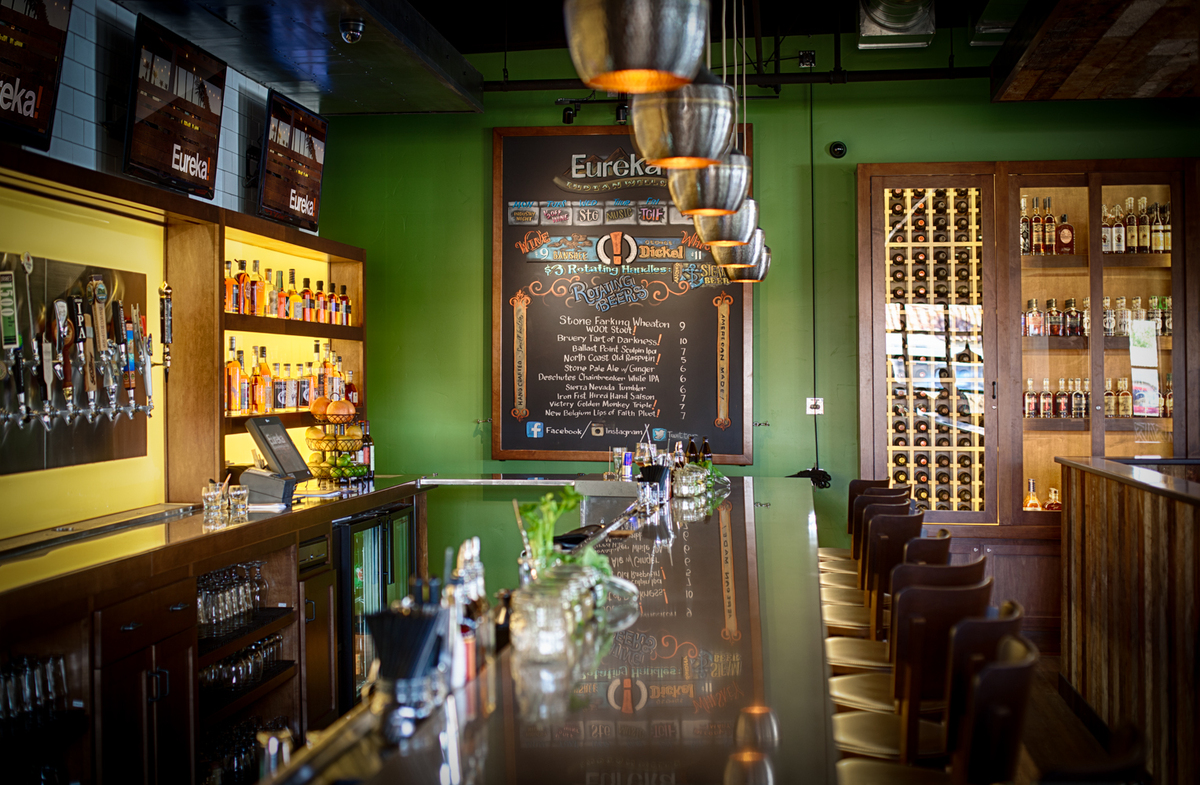
Which is exactly the recipe for success at Eureka! in Indian Wells. An established SoCal chain that is spreading its reach into other craft conscious locales as Austin, Boise, and Boulder, the spirits menu at Eureka! was a veritable who’s who of craft elite. Offerings included such reputable whiskey producers as Corsair, Westland, and Balcones alongside cocktail friendly spirits like Ascendant Spirits American Star vodka and Anchor Distilling Junipero Gin. Tasty gastropub fare and a trendy yet relaxed ambiance appealed to tourist and desert dwelling local alike.


The exciting thing in all of this is the massive potential for growth. With an ample market and plenty of industrial space just waiting to be repurposed, it’s only a matter of time before craft begins to really take off in Southern California. And with that comes the opportunity to explore a multitude of unique spirits, inspiring locations, and personal expressions. The incomparable essence of craft mixed with that quintessential SoCal style.
Continue reading
Share:
craft culture lifestyle micro-distilling MicroShiner philosophy

Zen and the Art of Micro-distillation

Wednesday, February 17, 2016
In his seminal work Zen and the Art of Motorcycle Maintenance, Robert Pirsig argues for the existence of something called Quality. There's such a thing as Quality in this world, he says, and it's real, not style. According to Pirsig, pursuit of Quality is the impetus for all human endeavor, and the consequence of this effort, what we call art. In this case, the Art of Micro-distillation.


Like many who have contemplated the Path to Enlightenment in terms of their daily existence, Pirsig also hints to the fact that there is as much value in the practice of art as there is in actually creating it. The real beauty of any art, whether in practice or form, is that it serves as a lens, a mirror upon which we can reflect. A person who sets out to practice the Art of Micro-distillation may not initially intend this practice as zen, but as they develop mindfulness through the exercise of their craft they will undoubtedly begin to strip away the trappings, the gilding that is employed to mask the absence of Quality. Through practice, and an unyielding quest for Quality, they distill their art to its essential form, that of pure spirit.  


Inviting as that sounds, those of us not fortunate enough to be micro-distillers need not run out and become one. Rather we may rejoice in the inspiration of their example and seek similar attainment through our own pursuit of Quality. In craft, whether by practicing our own or supporting that of others, we can discover a personal path to Quality, the virtue of which is not its only reward.


Practicing a craft lifestyle is itself a manner of such pursuit. It involves developing awareness and making conscious, deliberate choices in order to bring about outcomes that align with a particular set of values, then providing space to appreciate not only those outcomes, but the process of attaining them. It is a manner of living that is based on the contemplation of our relationship with the goods and services we attain, not merely the consumption of them. It is about asking yourself “why am I buying this?” and finding contentment in the answer.


The craft lifestyle also serves to reestablish our connection with natural orders, our relationship with our community and our environment. It gets us thinking about where products come from and who made them, and the implications of the process of their creation. Craft culture is not content with simply taking a box off a shelf and blindly trusting what is written on it. Those who practice a craft lifestyle seek Quality, and will not accept a mere assurance of it. It is something they must determine for themselves.

My personal feeling is that this is how any further improvement of the world will be done: by individuals making Quality decisions and that's all. - Robert Pirsig


Continue reading
Share:
craft spirits economics micro-distilling philosophy

Spirit of the Next Industrial Revolution

Monday, November 9, 2015
While the art of distillation in modern times may best be described as intoxicating, its roots are much more mundane. Surely fermentation was first recognized by humanity for its physiological effects, but it was alcohol’s utilitarian value in preserving food that truly made it valuable.

Since prehistory, man has fermented fruit and grain for storage. Because alcohol curbs or eliminates the growth of bacteria, it significantly lengthens shelf life compared with foodstuffs stored in other forms. It is for this reason that throughout time, a direct consequence of agriculture is alcohol, as it allows excess production to be utilized, rather than wasted.

Prior to the industrial revolution, beverage alcohol was omnipresent. Subsistence farmers and field workers drank low content beer, wine and cider from daybreak until sundown, to combat both the tedium of labor and the lack of clean water. By the 1st Century, Greek and Chinese alchemists had begun distilling these low-wines into high content spirits, giving rise to the "national" drinks of Europe.

Whiskey came to America in the late 18th century, likely at the hands of Scot and Irish immigrants who began to settle and farm the area of present-day Kentucky. The spirit they brought with them evolved to suit these new surroundings, making increasing use of their primary crop, corn, and became known as bourbon in the early 1900s. It was easier, and likely more profitable, to ship to market than grain, and barreling whiskey for the burgeoning seaboard communities soon became an integral part of Ohio, Kentucky, and Tennessee agriculture.

Today, interest in American whiskey is keen, as demonstrated by a recent announcement from MGP that it is spending $16.4 million to double warehouse capacity at its Lawrenceburg, Indiana distillery. MGP, for those that don’t know, is an industrial-scale producer of beverage-grade alcohol, and the base spirit behind innumerable craft labels and “small-batch” whiskeys, including Bulleit, Smooth Ambler, High West, Templeton and George Dickel. This investment is predicated on management's belief that “American whiskey is in the early stages of a long term growth trend … Increased capacity will help us better support the rapid growth of the whiskey category.”

How that makes one feel about the merits of their favorite craft label aside, the real problem with MGP’s rationale is that it flies in the face of current trends in economic dialectic and consumer thirst.

Steel, electrification, and the model of centralized mass production ushered in the second Industrial Revolution, the greatest increase in economic growth ever recorded. Fueled by petroleum, improved communications, and the Green Revolution, the period gave rise to a proliferation of cheap goods and the extensive urbanization of the world’s population, a cohort which in the past decade has come to exceed its rural counterpart for the first time in human history.

Today, we are on the cusp of another industrial epoch, one founded in the leverage generated by lateral power aggregated from abundant point sources. At its core, the recognition that a networked system of smaller nodes has a greater effective capacity than a centralized one of equal magnitude. Millions of connected utilities, constantly propagating, evaluating, and disseminating the whole of global output at the speed of light will power mankind into the future.

The loudest voice in this movement is that of Jeremy Rifkin, an American economist and philosopher. Rifkin has become a vocal proponent of renewable energy and intelligent infrastructure, and he has the ear of some pretty important people. He currently advises the United Nations on the Future We Want, and numerous world leaders, including the European Union and Premier Li Keqiang of China, have incorporated his economic precepts into their plans.

Revolution relies on disruption; in this case, distributed capacity. It is here where MGP’s thinking lags, and why the future of spirits belongs to craft.

The emergent economy is comprised of millions of people around the globe who produce and share information and energy across a network of peer-to-peer connections. Just as Napster disrupted the music industry when they introduced the world to file-sharing, today’s micro-distillers are disseminating production capacity across the landscape, disrupting a near century long paradigm of mass manufacture sustained by cheap transportation and regulatory strangleholds. Much like server farms, power plants, and factories will inevitably be replaced by nodes, solar collectors, and 3D printing, micro and craft producers will most assuredly supplant bulk spirits.

Were it not for market forces, however, MGP’s strategy might still be considered sound, and in the short term will likely prove profitable. With the majority of humanity living in an urban setting, regional point sourcing is not entirely feasible in all cases, and the company’s scale and expertise ensures a product of consistent quality that will remain relevant for some time. But the American drinking public grows increasingly intelligent, and the days of non-distilling producers, those who source bulk products and market them as their own, are numbered. As spirit imbibers become better educated, and micro-distillers pay off capital costs and achieve profitability, they will ultimately begin to undermine the legitimacy of the MGP business model.

Mankind is entering the next phase in its economic evolution, and as the population of the world continues to increase, its propensity for existential qualities such as terroir, regionality and distinction in its provisions and appurtenances will only intensify. People in the next chapter of human development will not be satisfied with cookie cutter products from an assembly line when they can just as easily download a design to their 3D printer that expresses their own unique tastes, any more than they will tolerate a whiskey that differs from a dozen others only in its label. And while this spells trouble for the likes of MGP, it opens up a world of opportunity for true micro and craft producers, whose spirits embody the essence of how, where, and by whom they were made.


Continue reading
Share:
craft spirits magazine micro-distillery micro-distilling MicroShiner

Spring Issue of MicroShiner Magazine Available Now!

Friday, May 1, 2015
Welcome to the Spring issue of MicroShiner magazine!

Dedicated to the Women of Craft, our Spring edition features stories on the amazing women distillers, owners, and mixologists who are currently pushing the boundaries in the world of craft spirits.

So pour yourself a drink from your favorite craft label and enjoy this tribute to the Women of Craft!


Continue reading
Share:
Colorado craft spirits event micro-distilling tasting

DSTILL 2015: The Showcase

Wednesday, April 22, 2015
Nothing brings people together like a good excuse to party. For me it started in my teenage years with a beat up old Mazda and the life changing discovery of my dad’s liquor cabinet which had, probably for my entire life, sat tucked behind his recliner in the living room. I quickly learned how much fun a good night out with friends can be, and what a good funnel of tap water can do to cover your trail.

Within a few years it was keg parties and college, jumping over the fence at the first sight of flashing lights and heading up to the ski slopes late the next morning to pass the time before night fell and the festivities started all over again. Fast forward six or seven more years and the desire is still burning bright, but due to previously unforeseen circumstances - like age, mortgage, and fiancé - these days it often takes a good cause to bring out the party.

Alas.


Thanks to DSTILL and their Showcase of all things craft on April 16, myself and hundreds of the Mile High City’s other proud weeknight lushes were brought together at the McNichols Civic Center Building to sample everything from vodka to moonshine from 49 of the world’s micro and craft distilleries. By my count, a good 35 of them were from Colorado, and I distinctly recall noticing the represented talent stretching from New York all the way to LA.

I started off the night with some absinthe. Perhaps a bit extreme, but I walked by the Golden Moon Distillery booth three or four times trying to establish my placement in the room and each time I caught myself eyeing the product like the coyote that lives behind my house eyes my dog. I could not seem to justify kicking it off any other way.


Opened in 2012, Golden Moon’s take on the green dragon is one of the products that has helped brand the company. “We started off by making 500 bottles of absinthe,” said Brand Ambassador Noah Henry. “Then we started making other spirits and playing around.” For the record, this is the absinthe of legend, made famous for many in my generation by the movie Eurotrip, when the character played by the ever-so-luscious Michelle Tractenberg is caught making out with her brother after they both downed a good amount of the stuff at a nightclub. “We use antique stills. Our stills are all French and German stills from the 1930s, 1950s. They are very small. Our goal is to make the finest craft spirits and craft cocktails in the Colorado market.”

With that absinthe, they might not be too far off. But what about something to stir in, to mellow out that taste of spoiled licorice? Or, if absinthe isn’t your thing, perhaps you are craving a little vodka? Well, you are in luck my friend.


What happened next was, if I do say so myself, a dose of absinthe-infused genius. As I slowly walked around the two-floor event taking it all in, mingling with fellow media folk, and even raising a toast with the mother of DSTILL founder Rob Masters, it hit me- here is all this booze, almost every type of distilled spirit I’d ever heard of, all in one building. A small horde of Denver’s finest eateries sampling their signature dishes paired with their signature cocktails. This event is the ultimate orgasm inducer for every opulent booze hound, a near free-for-all of toasty bliss for the mere price of admission. Every vendor here was trying to impress, and I would be lying if I said I hadn’t been impressed so far. But now it was time to take it up notch. It was time to create my own cocktail. Or, at least, take a well-known drink and kick it up a notch. Something that wasn’t on the menu tonight.


So I stopped by the Altitude Spirits booth on the top floor, a great company based in Boulder. I had seen their vodka around before tonight but had never tried it. “We’re a little bit like the black sheep for this party,” says Altitude Spirits president and co-founder Matthew Baris. “Everybody here is all about American craft spirits and our company is about awesome craft spirits from around the world. We have a London dry gin that is actually distilled in London by the smallest licensed distillery in the UK. We have the world’s only fair trade organic certified rum. We’re all about awesome craft spirits from everywhere.” I was here for their sole non-import, however. Baris poured me some vodka and I headed back downstairs to grab some mixer.


“The color comes from the ginger root itself as opposed to chemicals or colorings,” says Josh Morton, the founder of Barrow’s Intense Ginger Liqueur. I took a sample in my glass, squeezed in some lime, stirred, and sipped. Not a bad Mule I’d created for myself. Plus, Barrow’s is 44 proof, a large jump from the typical non-alcoholic ginger beer generally found in the drink. Morton even showed me his recipe for a Moscow Mule Shot, which is made up of 1 part Barrow’s on the bottom, 1 part vodka, and a squeeze of lime. “I love the idea of using craft liqueur in a shot because people think a shot is down-market and craft is (higher). A lot of people take craft too serious, so I like the idea of humanizing craft liqueur."

I had it. I dubbed it the Mile High Mule. It’s so simple. Take the best thing we’ve gotten from Russia (outside of the Miracle On Ice, of course) and make it entirely craft, and entirely potent. As American as it gets.

I finished off the night at the booth of Wood’s High Mountain Distillery, which is based in Salida, CO. “We mash, ferment, distill, age, and bottle all of our products on site,” says proprietor Lee Wood. These guys focus in depth on what they do, with three types of gin, two whiskys, and something I’d never heard of, an elderflower liqueur. “We source Colorado wines, distill that into a high-proof brandy. We then take it and distill it a third time through our gin distilling process, but instead of gin botanical we replace that with elderflower. We sweeten it with a raspberry honey from right here in Colorado.” Certainly not a bad night cap.


This event, at its core, is meant to showcase small-batch American craft spirits, and they do an amazing job. It is well organized, full of very friendly vendors and guests, and the amount of hard work each vendor in the room has put it in order to be here is overwhelmingly apparent. What I noticed about every distillery I spoke with is that each one has a story derived from pursuing passion and keeping it local, and that is exactly what this industry needs.

The boys from Avery, Ska, Great Divide, and Odell breweries hosted an open beer bar from 10 o’oclock until 11 for those who didn’t want the party to end. As for me, the aforementioned fiancé is heading down to pick me up, so I’ll have to save the after party for another time.

Golden Moon Distillery: 412 Violet St., Golden, CO 80401, goldenmoondistillery.com

Altitude Spirits: PO Box 1437, Boulder, CO 80306, altitudespirits.com

Barrow’s Intense Ginger Lqueur: barrowsintense.com

Wood’s High Mountain Distillery: 144 W. 1st Street, Salida, CO 81201, woodsdistillery.com

Dstill.co

Tim Wenger is a Denver-based journalist, musician and avid snowboarder. Catch his work in Colorado Music Buzz, MicroShiner, Snowboard Colorado, and his weekly talk show on worldviral.tv

Photos courtesy of Chris Haugen
Continue reading
Share:
craft spirits micro-distilling production

Strong Statement on Weak Spirits

Monday, April 6, 2015
In light of the recent article in the Des Moines Register about the efforts of Templeton Rye to settle two class action consumer fraud lawsuits through mediation, it seemed a good time to make a strong statement on what can best be described as weak spirits.


A little over a year ago, sitting in a room at the American Distilling Institute convention in Seattle, listening to an industry type drone on about revenue and margins, it was hard to imagine there was once a time when producers made things for entirely different reasons. They were economical, to be sure, but they weren't based around ‘how much cash can be sucked out of this venture before we liquidate?’. In those days, that person usually got left in the sun for their bones to bleach.


The first thing any craft spirit acolyte should know is that there are labels out there who are marketing sourced spirits. Whether sourcing neutral grain spirits as the base for another product or simply buying aged whiskey in bulk, the economics behind the practice are the same. Sourced spirits are readily available, buying them is much cheaper than capitalizing a true production facility, and they can be sold at a very high margin with a little creative marketing i.e. labeling them as ‘craft’.


There are many places on the internet where you can go to read about why that is wrong, mostly relating to the fact its illegal. The U.S. Tax and Trade Bureau requires that location of distillation be included on any spirit label; failure to do so, truthfully, will likely result in a lawsuit. But that doesn't absolve anyone of the responsibility to actually read it.


The other fact is that some of these producers using sourced spirits make really exceptional stuff. Whistle Pig, a Vermont label based on Canadian whiskey, has received significant praise. The success of Templeton Rye itself is testament to its perceived flavor and quality. And if that is all you are basing your decision on, there is no reason not to drink it.


However, if your intent is to support something else, like your local micro-distiller or the Craft Movement, then supporting producers who make use of sourced spirits is counter-productive. Either way, the decision ultimately rests with you.


Fortunately, for those of us who strive to support companies that are working to change the spirits marketplace, and perhaps the world, there are lots of options, often right in our own backyard. Honest, hard-working producers like Dry Fly Distilling and TOPO Spirits whose business motivations and practices look beyond the bottom line. Companies whose owners are leaders in their communities and who have made difficult and substantial effort to do it right.

Our recommendation is to seek out and buy craft spirits from one of them. As always, MicroShiner is here to help you make the connection.


Continue reading
Share:
craft spirits legislation micro-distilling tax

Can You Legislate Fairness?

Wednesday, March 4, 2015

It's not all that often that you see legislation designed to help the little guy, but a pair of our representatives in D.C. have proposed to do just that with what they call the Small Distilleries Fairness Act - HR 1172, a bill that purports to support growing small distilleries.

Congressman Rick Larsen (D-Washington) and Steve Stivers (R-Ohio) have introduced a bi-partisan bill that proposes to reduce Federal Excise Tax on small distilleries producing less than 100,000 proof gallons per year from the current $13.50 to $2.70 per proof gallon.

Congressman Rick Larsen
Since this is politics, there has to be some sort of pork barrel concession, so distilled spirits industry lobbyists are angling for introduction of a separate bill with language that will give a tax break to the first 100,000 proof gallons by a producer of any size. Such legislation may be more acceptable to the industry as a whole, insiders say.

We love the idea of giving undercapitalized micro-producers a leg up, but whether passage of the legislation would translate to a price break for consumers buying a bottle off the shelf remains to be seen. Until then, we'll stand behind labels such as Catoctin Creek who are taking matters into their own hands by remaining committed to marketing quality products at price points their customers can afford in spite of the machinations of an oft nonsensical tax system.

Weigh in on the matter by contacting your representative and voicing your support for America's micro-distillers!

View the language of the proposed legislation.

View the press release from Congressman Rick Larsen.


Continue reading
Share:
craft spirits magazine micro-distillery micro-distilling MicroShiner pairings

Autumn 2014 - Online Now

Friday, November 21, 2014
Our Autumn issue of MicroShiner magazine, featuring Raff Distillerie, Headframe Spirits, and Prohibition Distillery is now available online.

Examining a Century of Progress, alongside these fine micro-distilleries the issue also shares craft spirits and cocktail recipes from Greenhook Ginsmiths and Kings County Distillery, among others. Our featured dinner pairing is provided compliments of Catoctin Creek Distilling, and stories on small batch producers Beardbrand and Denver Bespoke round out this serving of craft culture for the fall of 2014.

Check out the magazine online, or order yours today!


Continue reading
Share:
craft spirits micro-distilling MicroShiner

Issuu on iOS

Friday, September 19, 2014
After some struggles integrating with the platform, and just in time for the release of iPhone 6, Issuu has finally launched its premier app for iOS. Now Apple users can enjoy the world of craft spirts in a beautiful new mobile format they can carry in their pocket.

Download the app and follow MicroShiner today!


Continue reading
Share:
absinthe craft spirits micro-distilling Tales of the Cocktail

Details from Tales: Absinthe Cocktail Lab

Thursday, August 7, 2014

The green lady, the green muse, the green goddess; absinthe has been known by many names, and they all possess at least a hint of intimidation to the cocktail neophyte. Add the intricate nature of its specialized stemware, the mystique of its famous louche and the mind-altering mythos surrounding one of its key ingredients, and it comes as no surprise that absinthe is seen by many as a distilled delicacy which only a true aficionado could enjoy. At this year's Tales of the Cocktail, however, an expert panel led by Stephen Gould aimed to shed some light into the cloudy allure of absinthe and offer even the casual carouser a firmer grasp on the fabled 'Green Fairy'.

High above the slate sidewalks and wrought iron balconies of New Orleans' famous French Quarter, the Riverview Room of the Hotel Monteleone played host to the most interactive seminar of the entire five-day Tales festival. Part history lesson, part crash course in mixology, the cocktail lab started off as an intimate affair with small groups of attendees seated closely together around impressive arrays of artisanal spirits, liqueurs and mixers provided to each table. As the afternoon unfolded, however, the crowd livened up and spread out, mixing and shaking an assortment of classic concoctions right along with world class bartenders, then serving up the newly learned recipes to their fellow absinthe apprentices.


While a custom, six-drink menu was created for the seminar, including such legendary cocktails as the Sazerac and two variations on the Corpse Reviver, the panelists took special care to explain the nuances and appeal of enjoying the green lady on its own. Using an iconic reservoir-style absinthe glass, barmen Noah Heaney and Joshua-Peter Smith offered some insight into the presentation and procedure of pouring a proper portion of the spirit. It was explained that the small chamber at the base of the vessel is designed to maintain a consistent alcohol serving size from the bartender, while the slow addition of cold water is often left to the bar patron. This practice allows the drinker to bring forth their preferred level of louche, a milky result of releasing the essential botanical oils suspended within the high-proof alcohol. The aesthetics of watching the liquid's immediate transformation is an impressive spectacle in its own right, but it also serves as the tell-tale signature for identifying a true absinthe distillation.


With T. A.Breaux at the podium, a world-renowned producer and promoter of the emerald spirit, the lore of wormwood was dispelled and the reality behind absinthe's notorious hallucinogenic association was revealed. Though it enjoyed immense popularity during the 19th century both in France and abroad, absinthe became a victim of its own success, according to Mr. Breaux. While imitation is often said to be the highest form of flattery, knockoff products, such as “Bohemian” absinthe, went a long way in tarnishing the reputation of the genuine article and creating a stigma of mind-altering side effects which persists to this day. Counterfeit absinthe contains little to none of the essential oils which are found in the original formula, and were often comprised mainly of poor-quality alcohols, wormwood for flavor, and a green coloring agent. The resulting combination was in the same vein as the dicey bathtub gins produced during Prohibition and contributed greatly to the incidents of “madness” in those consuming it.

Presently, absinthe's global reputation is on the rebound, thanks in large part to the debunking efforts of Mr. Breaux and his colleagues, though the market is by no means free of bogus products. Those looking to pawn off imitation wares have devised their own elaborate ritual to add a false sense of tradition to the ersatz creations while masking its inadequacies. This so-called “absinthe” is poured into its glass over a sugar cube, which is then set ablaze and submerged, with water added to quench the resulting flame and give the illusion of a louche. This gimmick conceals the lack of botanical oils and inability of the inferior concoction to cloud properly, do not be fooled!


With a bit of knowledge, true absinthe is easily identifiable and even easier to acquire these days, with Mr. Breaux and Mr. Gould producing some of the highest quality libations available through Jade Liqueurs and Golden Moon Distillery, respectively. Those seeking their own encounter with the 'Green Fairy' would be wise to begin their pursuit with such superior craft spirits.

Contributor Ian Gregory is a child of the 80's and a Tulane graduate, with a BA in History. Born and raised in Manhattan, NYC, he has called New Orleans his home for the last 10 years.

An experienced bartender, Ian has appeared in the Where Y'at Best Bartenders of New Orleans Guide on 3 separate occasions. Now testing the waters of freelance writing as a contributor forMicroShiner, he doesn't have a twitter handle, but feel free to find him on Facebook (
https://www.facebook.com/ian.gregory.121398)
Continue reading
Share:
craft spirits micro-distilling PROOF tasting Washington

PROOF That Craft is Alive in Seattle

Wednesday, July 30, 2014
As the sun beat down on Seattle’s Fremont neighborhood last Saturday, nearly 700 people seeking air conditioning and a cold drink found it at PROOF, the Washington Distillers Festival at Fremont Studios.


The event showcased almost 40 distilleries from Oregon and Washington, as well as local restaurants and other vendors. The venue featured a stage, where guest speakers shared their knowledge throughout the afternoon about using spirits and setting up a home bar.


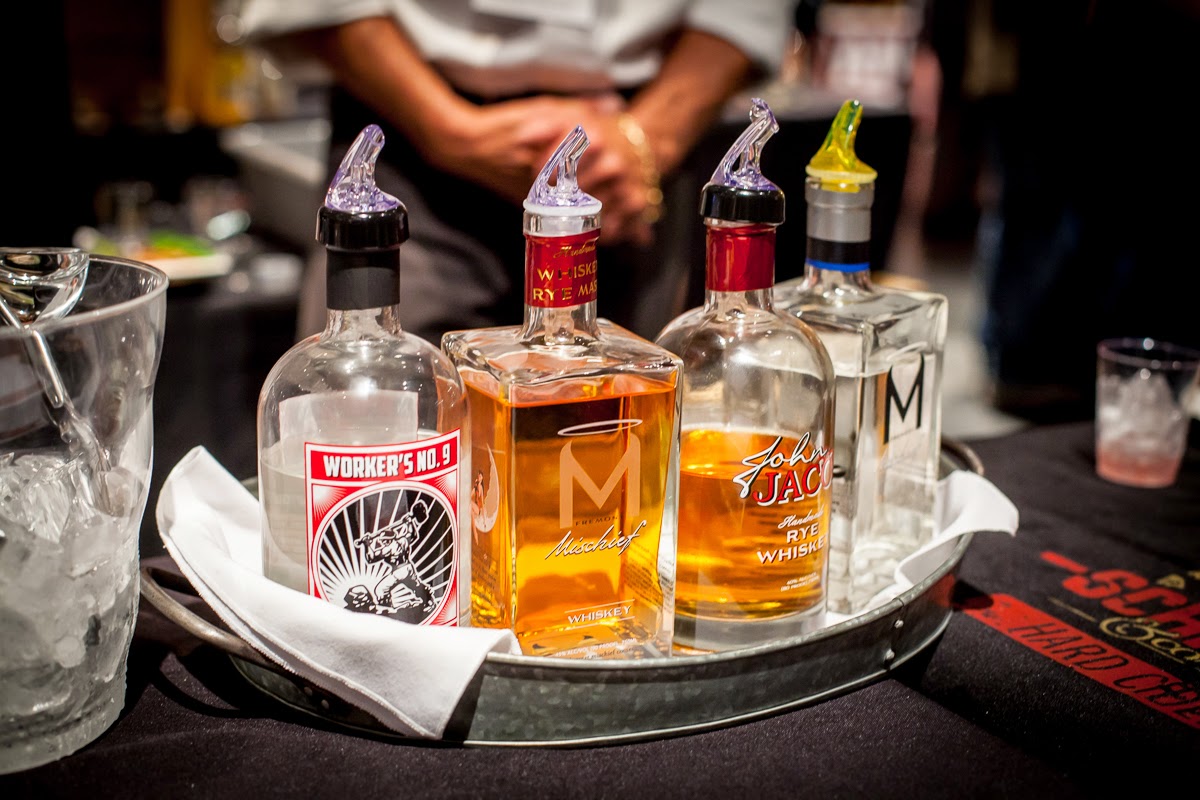
A few of the booths offered tastes of original cocktails, many of which were a collaboration between several different vendors. One of these was the Schilling Cider Company, which teamed up with Fremont Mischief Distillery to craft a tart and refreshing riff on a vodka cranberry featuring Mischief vodka and Schilling’s ginger cider.


The Seattle restaurant Urbane and Copperworks Distilling served a dry, sage-y cocktail using Copperworks’ gin alongside the restaurant’s alder-smoked oyster.


In the far corner of the darkened hall three local vendors — Bluewater Distilling, Anchorhead Coffee and Theo Chocolate — collaborated to craft a raspberry coffee cocktail that pairs with Theo’s raspberry dark chocolate. The drink is made by mixing equal parts Anchorhead cold-brew coffee concentrate and Bluewater’s vodka. Muddle in a handful of fresh raspberries and a dash of simple syrup and strain into a glass for a rich cocktail bursting with complex flavors.

“It’s like mixing sunshine with gold,” said Bluewater owner John Lundin, “and throwing in a rainbow.”


In another unlikely collaboration, Bluebird ice cream and Hardware Distillery joined together to make a boozy root beer float, with Bluebird’s house-made ice cream, root beer and Hardware’s unique “Bee’s Knees,” a distilled honey mead.

All the way from Portland, Oregon, House Spirits showcased its Aviation Gin, an innovation in dry American-style gin, which itself is the product of a collaboration between House Spirits distiller Christian Krogstad and bartender Ryan Magarian.


At another booth, Bradley Feather shared Bradley’s Kina Tonic mixed with club soda and Captive Spirits Big Gin. “Tonic in the old world was more of a medicine,” he explains. The amber, syrupy concoction is pays homage to the original. Bradley’s Tonic and Captive Spirits also have a close working relationship. After Captive Spirits starting aging some of its gin in used bourbon barrels, Feather bought some of those barrels third-hand in which to age his tonic. He hopes he’ll have the first batches of bourbon and gin infused tonic available soon.


Another vital but often overlooked cocktail ingredient, bitters, gets some handcrafted attention at Scrappy’s Bitters, which launched in Seattle in 2008 and can now be found in nine different countries.

“We actually hand zest all our citrus,” owner Miles Thomas says. At the booth he samples out his orange bitters against bitters from another brand that uses dried oranges, so people can compare. Flavors range from lavender to lime, and include aromatic, Orleans, celery and cardamom.


The Seattle SODO district’s Glass Distillery also had a booth at the festival. Glass burst onto the local spirits scene in 2012 with one product, a vodka distilled from Washington-grown wine grapes.

“I like the elegance and the sophistication that comes from grapes,” founder Ian MacNeill said. The grapes give the vodka a sweet, floral flavor and a silky smooth finish. Glass Distillery has since expanded its product line, slightly. Its Gridiron Vodka, a grain and grape blend, can be found at El Gaucho locations in Seattle and during Seahawks and Sounders games at CenturyLink Field.

At PROOF, MacNeill poured samples of his honey vodka and a dry, unsweetened vodka flavored with Kona coffee.

“I want to be known as the best vodka producer in the Northwest,” MacNeill said.

MacNeill is one of many local distillers who exemplifies the values that drive the craft spirits movement in the Pacific Northwest: a dedication to excellence, passion for the product and an enthusiasm for quality, local ingredients.


At its core, PROOF was a celebration of the Pacific Northwest, including the collaboration and creativity that resides in its burgeoning craft spirits culture.


Story - Emily Hamann

Emily Hamann is a freelance writer and reporter from Seattle, Washington. She has been writing for the web and print for three years. When she’s not writing about spirits, she enjoys kicking back with a good gin and tonic. She also likes taking her dog on adventures around the city. Find more from Emily here: @emilychamann

Photography - Ryan Castoldi

I am a freelance photographer living and working in Seattle, WA. I have worked in the industry for over 15 years and have enjoyed every aspect of the process. I love the collaboration with my clients and being able to tell their stories with my images. As a small boutique studio I am able to work closely with you to create unique and compelling images to sell your experience.

I am joined in Seattle by my wife and son (and son to be). When not working I enjoy hopping on a bike or travelling to the eastern side of the state in search of sun and family time; they farm the famous Walla Walla Sweet Onions! It’s also not unheard of to do a little wine tasting when in the area.

I am available to shoot in my Seattle studio near Pikes Market or on location wherever needed. You can reach me via my website:  www.ryancastoldi.com
Continue reading
Share:
Older Posts Home
Subscribe to: Posts ( Atom )

Support Us!

Become a Patron!

MicroShiner TV

PODCAST

  • Podcast
  • Watch
  • Journal
  • Community

Join our Community

Subscribe to our mailing list

LEAN IN

We love connecting with like-minded companies! To learn more about our platform, please contact us at growth@microshiner.com
Powered by Blogger.

Labels

  • #DrinkBetter
  • cocktail
  • culture
  • micro-distillery

Popular Posts

  • Visit us at MicroShiner.com
    We've moved! Be sure to visit the new MicroShiner website , where you can subscribe to our videos, podcast, RSS feed, and download our ...
  • Arnold Palmer: Golf Legend
    I've always made a total effort - Arnold Palmer Few people have had the impact on the game of golf that Arnold Palmer has. His meld of...
  • Life, Distilled - Episode #9 - Solar Spirits
    In this episode, we visit Solar Spirits in Richland, Washington and talk with founder Kris Lapp and assistant distiller Danny Watt about th...
© 2017 MicroShiner | All rights reserved
Blog Templates Created By Templateclue - WP Themes